"Mike's career at the heart of the UK's payments infrastructure and his wide perspective on the evolution of the space are invaluable to those of us developing strategies in the field." Dave Birch
The Hidden Heroes Bridging The Digital Divide
The Hidden Heroes Bridging The Digital DivideExploring the people quietly powering financial inclusion across the UKAcross the UK, a remarkable and often overlooked form of support is happening every day - one that rarely makes headlines but plays a vital role in people’s lives. New research led by independent consumer finance expert Faith Reynolds, with support from LINK, the UK’s cash access and ATM network, shines a light on the scale and importance of informal financial help. For many people digital banking feels complicated and in some cases scary. They are turning to trusted friends, family and neighbours to help them make sense of it all. In turn, they have become the ‘shadow infrastructure’ for the digital banking ecosystem, in some cases resorting to risky, informal workarounds to make things work. We can and should build a payments system which gives everyone the confidence, control and the support they need to manage their money effectively.
Faith Reynolds, Director, Devon Fields Consulting
From assisting with online payments to checking account balances, millions of people are stepping in to help others manage everyday banking tasks. In fact, around 11 million people in the UK regularly support friends, family members, neighbours, or those they care for with their finances. This is not just occasional help - it represents a significant and ongoing commitment. The scale of hidden help is further proof that digital banking doesn’t yet work for everyone. As well as maintaining cash for the millions that rely on it, we need more inclusive digital banking so that people aren’t left behind as technology marches on.
John Howells, CEO, LINK
The time involved is substantial. Collectively, financial helpers are contributing an estimated £332 million worth of time every month just to support basic banking needs.
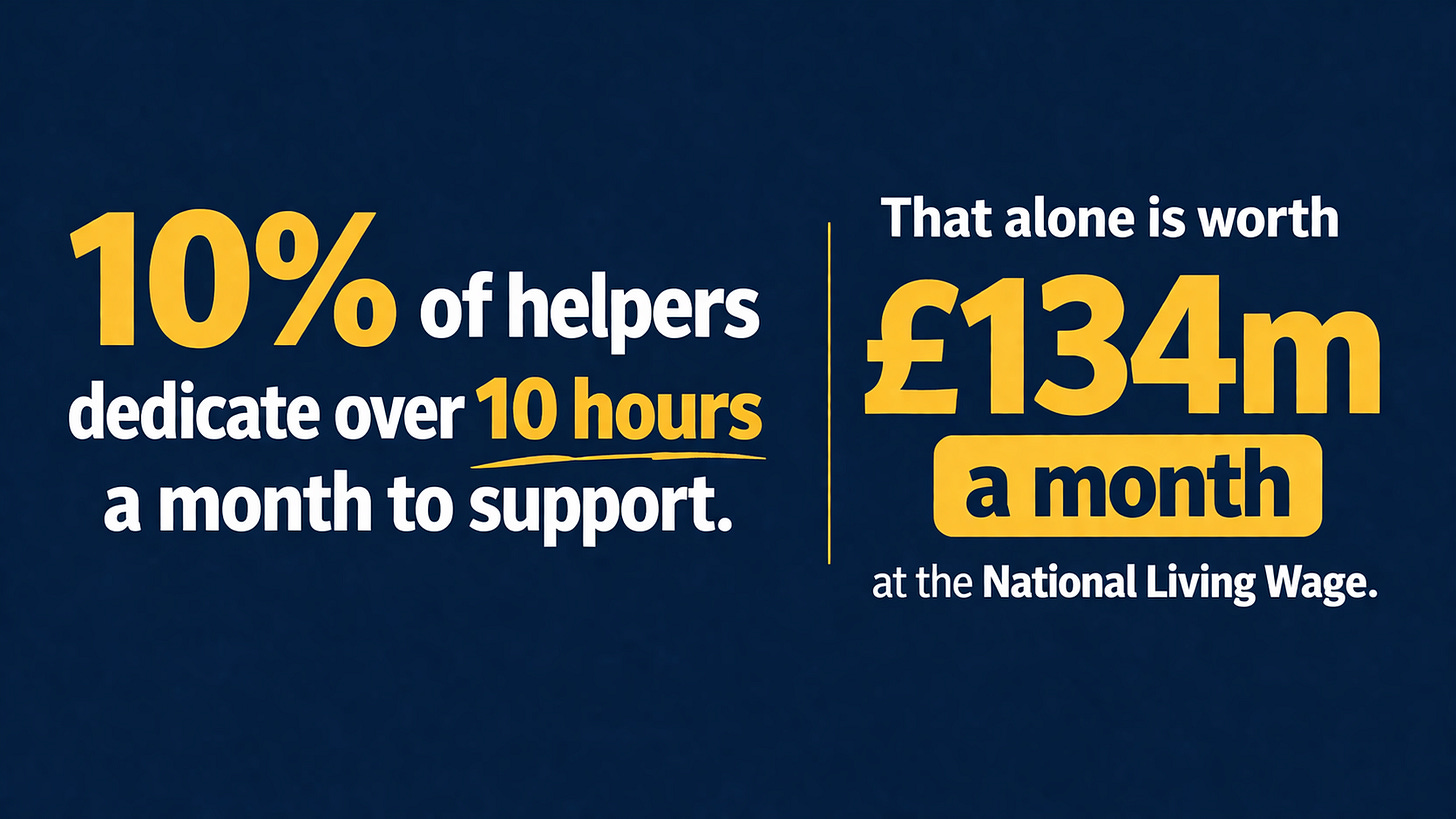
For some, this means dedicating more than 10 hours each month - an effort that alone is valued at £134 million based on the National Living Wage. These contributions are often made quietly, alongside work, family responsibilities, and other commitments. Many helpers are balancing full-time jobs, raising children, or enjoying retirement, yet still make time to support others. This helpful new research clearly reinforces Project Nemo’s findings on the over reliance on risky informal workarounds across the learning disability community and our call to action for safer and more transparent ways for people to help others manage their money in a digital world.
Joanne Dewar, Co-founder, Project Nemo
As banking becomes increasingly digital and traditional branches decline, this kind of help is becoming even more essential. Most helpers sit alongside the person they are supporting while they log in themselves, guiding them through the process. However, the research also highlights that many people rely on informal - and sometimes risky - workarounds. Some share passcodes or security details, allow others to log in on their behalf, or even hand over security devices. Notably, over half of helpers have no formal authority or access rights. Despite this, they continue to provide support, often navigating uncertainty and concern. Many worry about the potential for misunderstandings or being accused of wrongdoing, while a significant number are particularly concerned about protecting those they help from fraud and scams. The types of support provided reflect everyday needs: checking balances, helping with online purchases, and managing payments are among the most common tasks. Encouragingly, more than a quarter of helpers say they have actively helped prevent scams or fraud - highlighting the protective role they play.
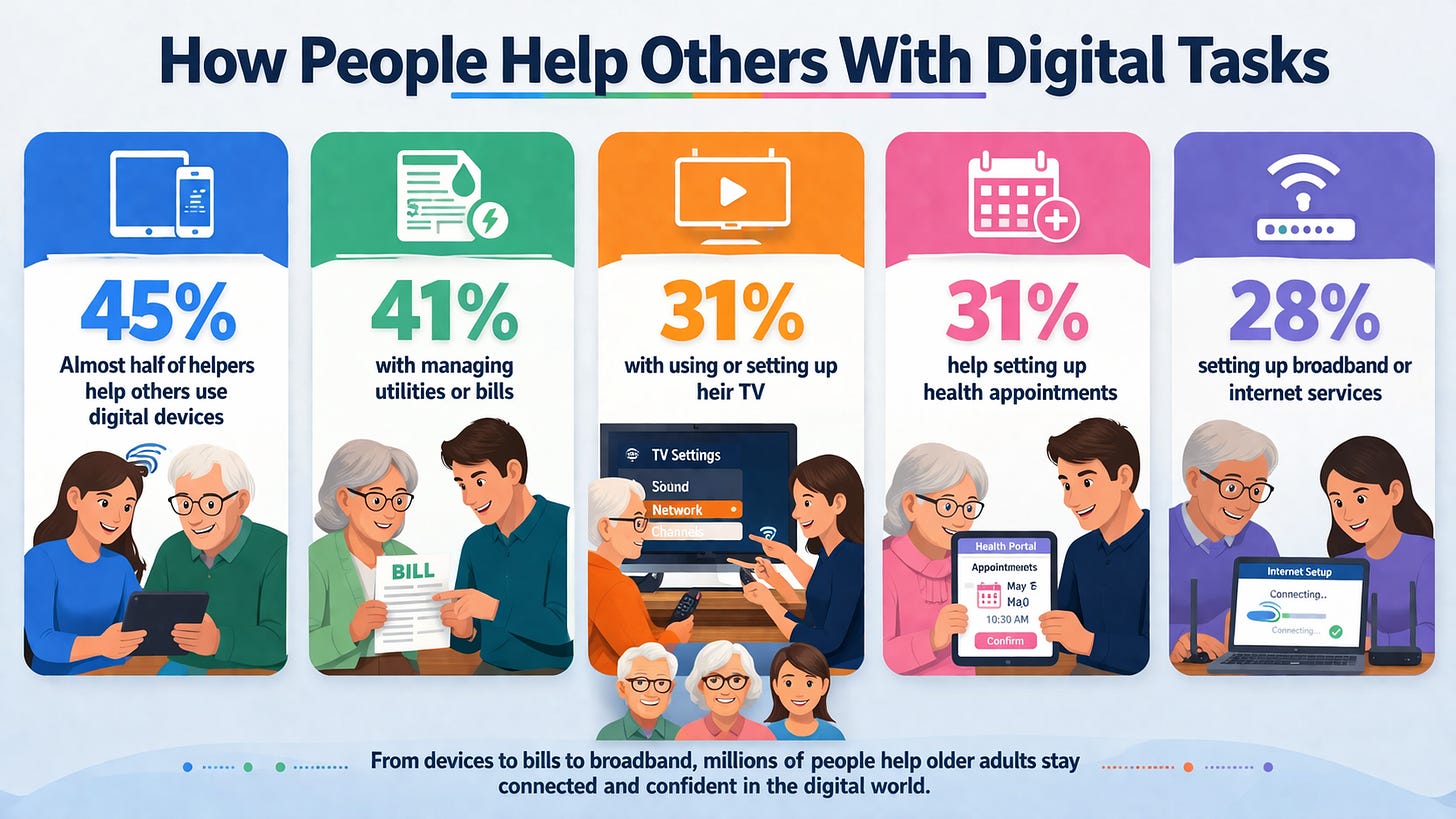
Importantly, this support extends well beyond banking. Many helpers are also assisting with digital devices, managing bills, setting up internet services, arranging health appointments, and even configuring TVs. This paints a broader picture of digital and financial inclusion—one built on trust, patience, and human connection. As Hidden Heroes highlights, millions of people are helping friends, family and neighbours manage everyday financial tasks. Our recent report suggests that we need to recognise this and provide supported access as standard. The Connection Project and our partners will now be working together to explore how digital services can better support this reality, so that people can get help safely and confidently when they need it.
Natalie Ceeney CBE, Chair, The Connection Project
This research highlights something deeply positive: a culture of care and mutual support that is quietly holding communities together. At the same time, it points to an opportunity—to better recognise, support, and empower these helpers with safer, more accessible tools and systems. Our Real Accounts work confirms what the Hidden Heroes report finds which is that managing money is often a family and community activity, with households relying on trusted networks to help with money management. We desperately need financial services that recognise these interconnected lives and provide tools that support, rather than hinder, these vital social safety nets while also tailoring and optimising products so people feel confident to use them themselves where they can.
Will Sandbrook, Managing Director, Nest Insight
As the financial landscape continues to evolve, recognising the value of these everyday acts of support is essential. They are not just filling gaps - they are strengthening resilience, fostering inclusion, and ensuring that no one is left behind in an increasingly digital world. As financial matters are becoming increasingly digitally based, my partner struggled to get accustomed to the new banking systems. With multi-factor authentication, there is an added requirement for security, and this can be a frustrating hop when accessing banking apps. Even with biometrics, it sometimes resets on the phone app and this causes issues when trying to access the apps. This can be difficult to overcome when in a hurry.
Male, 55+, London quoted in the report
Hidden HeroesUnderstanding the UK’s 11 million ‘financial helpers’
New research led by Faith Reynolds, an independent consumer finance expert with support from LINK, the UK’s cash access and ATM network, reveals the extraordinary scale of informal financial help in the UK. Friends, family, carers and neighbours are spending hours each month patiently helping others with basic banking tasks, yet over half do so without any formal authority, relying on risky workarounds and trust to provide that help. The full findings are available in a new report - click the button below to download it.
|


Payments:Unpacked
"Mike's career at the heart of the UK's payments infrastructure and his wide perspective on the evolution of the space are invaluable to those of us developing strategies in the field." Dave Birch
Your summer 2026 payments strategy - all in one place Everything you need to know about payments, without the usual noise. Even on holiday, payments don’t slow down. ISO 20022 deadlines, real‑time expansion, rising fraud, and regulatory pressure are all accelerating into 2026. That’s why we’ve teamed up with Bottomline’s Summer School 2026, a curated, on‑demand series designed for banks and NBFIs who want to stay ahead without spending hours researching. Your payments architecture is being...
Your summer 2026 payments strategy - all in one place Everything you need to know about payments, without the usual noise. Even on holiday, payments don’t slow down. ISO 20022 deadlines, real‑time expansion, rising fraud, and regulatory pressure are all accelerating into 2026. That’s why we’ve teamed up with Bottomline’s Summer School 2026, a curated, on‑demand series designed for banks and NBFIs who want to stay ahead without spending hours researching. Structured data is your next...
Welcome to Week 3 of the 2026 payments summer school. Your summer 2026 payments strategy - all in one place Everything you need to know about payments, without the usual noise. Even on holiday, payments don’t slow down. ISO 20022 deadlines, real‑time expansion, rising fraud, and regulatory pressure are all accelerating into 2026. That’s why we’ve teamed up with Bottomline’s Summer School 2026, a curated, on‑demand series designed for banks and NBFIs who want to stay ahead without spending...